WPTavern: #236 – Brian Coords on WordPress as the Source of Truth
Transcript [00:00:19] Nathan Wrigley: Welcome to the Jukebox Podcast from WP Tavern. My name is Nathan Wrigley. Jukebox is a podcast which is dedicated to all things WordPress. The people, the events, the plugins, the blocks, the themes, and in this case, making WordPress the source of truth across web projects, not just the website. If you’d like to subscribe to the podcast, you can do that by searching for WP Tavern in your podcast player of choice, or by going to wptavern.com/feed/podcast, and you can copy that URL into most podcast players. If you have a topic that you’d like us to feature on the podcast, I’m keen to hear from you and hopefully get you, or your idea, featured on the show. Head to wptavern.com/contact/jukebox and use the form there. So on the podcast today we have Brian Coords. Brian’s journey started in teaching and after a surprise detour, thanks to a growing family and a need for new work, he jumped headfirst into WordPress, spending a decade in agency and freelance roles before landing as a developer advocate at WooCommerce. He’s known for his knack for explaining the complicated parts of WordPress, championing documentation, blogging, podcasting, and bridging the gap between community needs and product development. Brian recently delivered a talk at WordCamp US entitled, The Site is the Source of Truth, Block Themes, AI and Agency Workflows, and that’s the focal point for our conversation. We start with Brian’s background in both education and development, and how he finds his DevRel role the perfect bridge between those worlds. We then get into the evolution of WordPress from its early days to the present, questioning just what it is that has given the platform such staying power, especially as agencies race to adopt shiny AI tools or static site builders, and are tempted to throw WordPress out with the bath water. Brian sees unique value in the WordPress ecosystem, especially for sites with longstanding content, integrations, and complex needs. And he makes the case for why the platform is built to last. We talk through the idea of the site as the source of truth, using WordPress, and increasingly block themes, not only as a publishing platform, but as the repository for all your design, content, and workflow guidelines. Instead of letting generative AI run wild, and potentially cause chaos, Brian outlines how agencies and product teams can centralise approved patterns, templates, and even content guidelines directly in the WordPress site, helping both AI and human users maintain brand and design consistency. We also unpack the state of block themes, why agency adoption is taking longer than expected? What’s coming soon for WooCommerce users, and how the move to block-based building is reducing plugin sprawl and making sites more resilient. And of course, we wrestle with the tight rope walk of what should go into WooCommerce Core, versus what is better left to the ecosystem, especially in a world where AI can spin up basic plugins in seconds. If you’re curious about how WordPress agencies can survive and thrive alongside AI, what the future holds for block themes, and how to build smarter, more sustainable workflows, this episode is for you. If you’re interested in finding out more, you can find all of the links in the show notes by heading to wptavern.com/podcast where you’ll find all the other episodes as well. And so without further delay, I bring you Brian Coords. I am joined on the podcast by Brian Coords. Hello, Brian. [00:04:05] Brian Coords: Thank you for having me. [00:04:05] Nathan Wrigley: Oh, you’re so welcome. Brian and I were supposed to record this podcast episode at WordCamp US, but, Jamie Marsland. [00:04:14] Brian Coords: He ruined it, yeah. [00:04:16] Nathan Wrigley: Yeah, we’re going to blame him. We had another engagement, which was to watch Jamie Marsland. But I appreciate you giving me the time after your WordCamp US experience. We’re both back home now. But if anybody isn’t familiar with you, Brian, we’re going to be talking a little bit about a presentation that you did at WordCamp US. That’s going to be the fulcrum around which the conversation goes. I’m going to encourage everybody, probably to go and look at the WP Tavern show notes, check them out. We will link to that presentation, which is called The Site is The Source of Truth: Block Themes, AI, and Agency Workflows. Hopefully gives you some intuition of what we’re going to talk about. Brian, do you just want to tell the audience a little bit about you? I know it’s a rather generic question, but tell us about you, your background, lo these many years. [00:04:58] Brian Coords: Yeah, so currently I work at WooCommerce as a developer advocate, so just working on community documentation, release posts, the blog, all that kind of communication stuff for WooCommerce. But before that, I spent like 10 years in the agency and freelancer world building WordPress sites, so I leaned on that for WordCamp US. Especially because you can only talk about WooCommerce so much at a WordCamp, so I leaned on my agency background and figured block themes, AI, all this stuff mixing around, what can I try to make sense out of it, and I don’t know if I did, but I got some thoughts out. [00:05:34] Nathan Wrigley: I remember a couple of years ago, prior to you getting that job, you were doing various bits and pieces, one of which actually for a tiny period of time was writing for The Tavern. And then I remember you getting the job. I was looking at your profile on social media, I think, and you landed the developer relations job, and I thought, “Oh, if ever there was a job which fitted a character,” it felt like you had dropped into something absolutely ideal. Do you just want to tell us what that role actually involves? And is it as ideal as it
Akismet: Upgrade to the official Akismet Drupal module
If your Drupal site still runs the community Akismet module (drupal/akismet), the official Akismet module (drupal/akismet_antispam) can upgrade it in place. You swap the Composer package, run database updates, and your API key and protection settings come along. We built it so you don’t have to uninstall, reinstall, and re-enter everything. This post walks through the steps. Which sites this covers The update needs Drupal 10.3 or later on PHP 8.1 or later. That covers sites on the community module’s 2.0.x releases and its 8.x-1.x dev branch. If you’re on an older setup: 8.x-1.0-alpha2 (Drupal 8 or 9): update the community module to 2.0.0-alpha2 while you update core, then follow this post. 7.x: upgrade Drupal first, then install the official module fresh. Your Akismet account and API key still work. The migration guide on drupal.org has a table for every release if you’re not sure which one you run. Before you start Back up the database. The update only goes one way. Note which roles have “Bypass Akismet protection.” The update removes that permission (more on that below). Plan one deploy for the whole swap. Between the Composer change and drush updb, spam protection is off and some admin pages break, so don’t leave a gap between them. What carries over, and what doesn’t These come along: Your API key Your connection timeout, if it’s between 1 and 60 seconds Your comment, contact and registration protection settings These don’t: Check history. The community module’s akismet table is dropped, so the Spam tab starts empty. Those rows hold submitted content, including author emails and IP addresses, and the official module has no way to erase them later. Per-form settings. The community module could protect some comment types or contact forms and not others. The official module has one toggle per category, and it covers all of them. Per-form “discard spam.” This becomes one site-wide strictness setting. Test mode, custom API endpoints and the “block all submissions” outage policy. The “Bypass Akismet protection” permission. The update removes it from every role that had it. The official module’s equivalent is bypass akismet, and it isn’t granted automatically. Webform handlers. You’ll need to re-attach the Akismet handler to each webform that used it. You don’t have to track any of this by hand. The update prints a report that names every item above that applies to your site. The migration composer remove drupal/akismetcomposer require drupal/akismet_antispam -Wdrush crdrush updb Run them in that order, back to back. composer remove first, and leave the module installed in Drupal. Don’t uninstall it, because the update reads its database state. The official module’s composer.json conflicts with drupal/akismet, so Composer won’t install them side by side. composer require … -W lets Composer update shared dependencies, like the Akismet PHP SDK or the PSR HTTP packages, if your lock file pins an older version. Without -W, Composer can refuse with “the package is fixed to … (lock file version).” drush cr before anything else. The community module shipped services that no longer exist, and Drupal still has them cached. Until you rebuild, logged-in pages return a 500 and drush commands die on shutdown. drush cr works when nothing else does. drush updb runs the update. Stay off the comment admin screens until it finishes. Read the report. It’s also logged to watchdog, so you won’t lose it if your terminal scrolls away. Then export and commit the new configuration: drush cex On every other environment, rebuild the cache before anything else touches it: drush cr && drush deploy Check that it worked Settings: confirm your protection toggles at /admin/config/content/akismet. Status report: check the Akismet entries at /admin/reports/status. Test submission: post a comment as an anonymous user named akismet-guaranteed-spam. Akismet always flags that name, so the comment should land in the Spam tab. Already on the official module 1.0? Upgrading to 1.1 is one command and a database update: composer update drupal/akismet_antispam -Wdrush updb The -W matters here. Version 1.1 needs Akismet PHP SDK 1.5, and if your lock file still pins 1.4, Composer stops with: drupal/akismet_antispam 1.1.0 requires automattic/akismet-sdk ^1.5 -> found automattic/akismet-sdk[v1.5.0] but the package is fixed to v1.4.0 (lock file version). -W (short for –with-dependencies) lets Composer update the SDK along with the module. Questions If something in the report surprises you, or the update doesn’t go the way this post says, open an issue in the issue queue. The migration guide and the module’s README have the full details.
WordPress.org blog: WordPress 7.1.3 Maintenance and Security Release
This security and maintenance release features 7 security fixes and 4 bug fixes. Because this is a security release, it is recommended that you update your sites immediately. You can download WordPress 7.1.3 from WordPress.org, or visit your WordPress Dashboard, click “Updates”, and then click “Update Now”. If you have sites that support automatic background updates, the update process will begin automatically. Security updates included in this release The security team would like to thank the following people and organizations for responsibly reporting vulnerabilities, and allowing them to be fixed in this release: A stored XSS on the Comments administration page, exploitable via pending comments, reported by Thomas Chauchefoin at Trail of Bits A DoS issue in the WP_Http::make_absolute_url() method, reported by Anthropic A second-Order SQL injection in WordPress WXR export, reported by Anthropic A weakness allowing Author role users to sticky posts, reported by Anthropic Unauthenticated disclosure of comments on private & unpublished posts, reported by Ananda Dhakal from Patchstack Imgur embeds are vulnerable to XSS, reported by Zhengyu Liu, Jingcheng Yang, and Gavin Zhong Forgeable parameters passed to the {status}_{type} hook can lead to action name collision, reported by Alex Concha of the WordPress security team Thank you to these WordPress contributors This release was led by Jake Spurlock. WordPress 7.1.3 would not have been possible without the contributions of the following people. Their asynchronous coordination to deliver maintenance and security fixes into a stable release is a testament to the power and capability of the WordPress community. Aaron Jorbin, Adam Silverstein, Adi Moldovan, Adrian Duffell, Alex Concha, Arkaprabha Chowdhury, Deepak Kumar, donniam, Ehtisham Siddiqui, Jake Spurlock, Jb Audras, Jeremy Felt, Joe Dolson, John Blackbourn, Jon Surrell, Jonathan Desrosiers, Ken Gagne, Khokan Sardar, Lance Willett, lucatume, marcs0h, Peter Wilson, pkevan, RS Software, Rudy Faile, Sergey Biryukov, siliconforks, smerriman, Stephen Bernhardt, Suryakant Upadhyay, vortfu, webVerts, Weston Ruter, Yogesh Bhutkar Backports As a courtesy, the security fixes are being backported, where necessary, to all branches eligible to receive security fixes (currently through 4.7). As a reminder, only the most recent version of WordPress is actively supported. The backports are in progress and will ship as they become ready. How to contribute To get involved in WordPress core development, head over to Trac, pick a ticket, and join the conversation in the #core channel. Need help? Check out the Core Contributor Handbook.
Open Channels FM: Open Source Maintainers Defend Against AI Spam, Linux Data Trends and WordPress Accessibility Challenges
AI-driven growth presents challenges in security and accessibility and infrastructure hurdles that technology teams cannot ignore.
Open Channels FM: The Essential Human Touch in Genealogical Research
As artificial intelligence becomes more integrated into genealogical research, it is tempting to imagine a future where longstanding mysteries are unraveled with a few keystrokes. AI tools can now scan, transcribe, and sort through centuries of records, but the heart of successful genealogy still depends on something machines cannot replicate: the human touch. No matter […]
OpenStation Blog: Someone Said “I Hate OpenStation.” That Was Actually Useful.
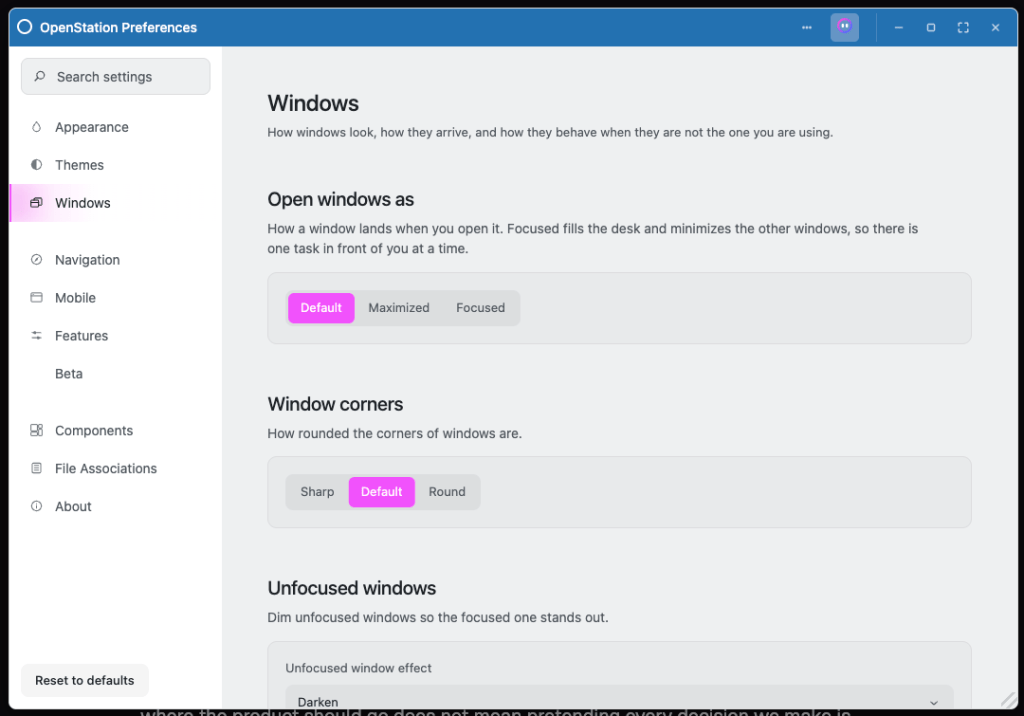
A few days ago, someone opened a support thread about AllTerrain Forms and, in the middle of otherwise useful feedback, wrote something very direct: “I hate OpenStation.” Obviously that is not the nicest sentence to read when you are working on the product, but at the same time it immediately got my attention because this is exactly the kind of feedback that can be useful if you don’t take it personally. So instead of trying to explain why OpenStation is good, or why we made certain decisions, I asked a very simple question: what exactly makes you hate it? Her answer was actually very good. She works on a laptop, so screen space matters a lot. OpenStation was opening windows too small for her workflow, which meant that one of her first actions was always maximizing them. She also didn’t like losing the visible URL because she regularly copies URLs into emails, project trackers or messages. On top of that, her users are not very technical, and from her point of view OpenStation was adding another layer to WordPress that she would eventually have to explain and support. She basically said that browser tabs already exist, users understand them, they use the whole screen, and they don’t hide the URL. And I think this is exactly where building software becomes interesting, because from our side all of those decisions had reasons behind them, but reasons don’t really matter if the final experience is worse for the person using it. None of these are theoretical product discussions. They are very concrete things that someone hit while trying to use the software for real work. That matters a lot to me. We started discussing these points immediately, and one of them has already made it into the next OpenStation release. Users will now be able to choose how new windows open: using the current default behaviour, maximized, or focused. Focused mode maximizes the new window and minimizes the other windows on the same desk, so people working on smaller screens can have something much closer to the experience they expect. This came directly from that kind of feedback, and the implementation is already merged: PR #964: Preferences: choose how newly opened windows appear And this is really the point. We obviously have our own vision for OpenStation. We believe WordPress can have a much better working environment than the traditional admin experience, and there are many things we still want to explore there. But having a strong idea of where the product should go does not mean pretending every decision we make is correct. Sometimes the most useful feedback is not “great release” or “this looks amazing”. Sometimes it is someone telling you that a window is too small, that they want the URL back, that something scrolls when it shouldn’t, or simply that they don’t see the benefit of what you built. That kind of feedback forces you to look at the product from outside your own head, which is probably one of the hardest things to do when you have been working on it every day for months. For me, OpenStation becoming more mature is not only about adding more apps, more features or more ambitious ideas. A big part of maturity is improving all those small things that make the product feel natural, predictable and less annoying to use. And I think there is also something important here about open source. People can complain, explain exactly what does not work for them, and a few days later they can literally see the code that changes that behaviour. That is a pretty healthy way to build software. So yes, tell us when OpenStation is great, but especially tell us when it sucks. We may not agree with every suggestion, and we obviously cannot build every requested feature, but if there is a real problem behind the feedback, we want to understand it. In this case, someone said “I hate OpenStation.” Fair enough. A few days later, OpenStation got better because of it.
Open Channels FM: Technology’s Fast Feedback Loop with Triumph of the Nerds, Agile AI, and WordPress Security
Faster tech means new challenges from AI feedback loops to WordPress security incidents.
Open Channels FM: Topics in Tech Business, It’s Rinse and Repeat
Sometime we think, been there, done that, but hey, not everyone has done that.
Akismet: Akismet Now Supports Drupal 12
Version 1.1.0 of the official Akismet Drupal module is out with support for Drupal 12. If you’re planning your move to 12, spam protection won’t hold you back. Here are the highlights. Drupal 12 from day one The module now runs on Drupal 10.3+, 11 and 12. On Drupal 12, Akismet checks comments and user registrations as soon as you install it, since both live in core. Contact forms, webforms, and the Key module will be supported as soon as they’re ready for D12. What else is new in 1.1.0 Better spam scoring Every check now gives Akismet a fuller picture of each submission. The module’s bot detection watches how someone fills out a form: how long they take, how they type, and how they scroll, click or tap. In 1.1.0, all of those signals feed straight into Akismet’s spam scoring. With more context, Akismet can better tell a real person from a bot, so you should see more spam caught and fewer real messages flagged by mistake. Better GDPR export drush akismet:gdpr-export now takes –format=json (or csv and yaml) and returns the full stored record for each match, including the original submission. That makes subject access requests easier to answer completely. The export also withholds the moderator’s identity, as GDPR Article 15(4) allows. Clearer warnings about your stored API key The status report now warns you about a leftover copy in yoursettings and stays visible until you deal with it. A new Delete stored API key form removes it in one step. You’ll find the link on the settings page and in the status report. Coming from the community module? Before the official module, some Drupal sites used the community-maintained Akismet module (drupal/akismet). That project is no longer maintained. If you’re still running it on Drupal 10.3 or later, 1.1.0 can take over your install in place. Your API key, connection timeout and protection settings carry over, and the update prints a report of everything it migrated, changed or dropped. Our migration guide on drupal.org walks through the process. Get started You’ll need an Akismet API key. Grab one from our pricing page. It’s free for personal sites. For a new install: composer require drupal/akismet_antispam If you’re already on 1.0, update the module along with the Akismet PHP SDK it depends on, then run the database updates: composer update drupal/akismet_antispam –with-dependenciesdrush updb The module needs Drupal 10.3, 11 or 12 and PHP 8.1 or newer, or the newer PHP your Drupal core requires. Found a bug or have an idea? Tell us in the issue queue. New to the module? Start with our introduction to the official Akismet Drupal module, or see how it’s built on the official Akismet PHP SDK.
Open Channels FM: Beyond Rants, Productive Discussions and the Mystery of Poor Design Choices
Bob Dunn reflects on online conversation styles and an infamous hardware design blunder, offering unsolicited solutions and food for thought.